Gluten-Free & Alcohol-Free in San Sebastián: How to Enjoy a Pintxos and Wine Tour (2026 Guide)
Is wine gluten-free? Which pintxos are safe for coeliacs? Where to find alcohol-free wine and cider, and which tours adapt? A practical 2026 guide to San Sebastián.
San Sebastián’s bar counters look like a coeliac’s nightmare, and a city built around wine can look like a hard sell if you’re not drinking. Neither is the problem it seems. Wine, txakoli and cider are naturally gluten-free, many of the city’s best-known bites contain no flour, and alcohol-free wine is now good enough to win awards. What you need is to know which bites and which bars, and to tell your tour operator before you book.
Quick answer:
- Is wine gluten-free? Yes. Wine made from grapes is naturally gluten-free, and so are txakoli, Rioja, cava, sherry, vermouth and Basque cider. Spain’s coeliac federation (FACE) and Coeliac UK both list wine and cider as suitable. Ordinary beer is the one to avoid, including most alcohol-free beer, unless it’s labelled sin gluten.
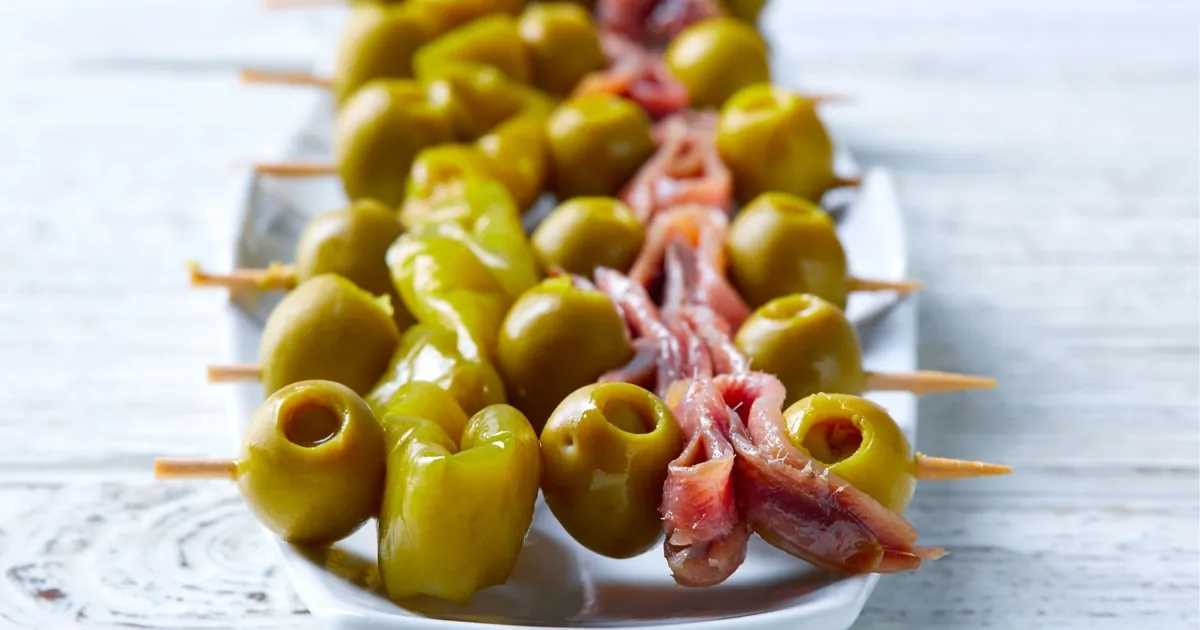
- Can coeliacs do a pintxos crawl? Yes, with planning. Grilled meat, seafood, anchovies and the classic gilda contain no gluten. The real risks are bread bases, fried food and shared fryers. Choose bars with a written gluten-free menu, and say “soy celíaco/a”.
- Can non-drinkers join a wine tour? Yes. San Sebastián bars pour alcohol-free wine (vino sin alcohol), grape juice (mosto), Basque apple juice and even alcohol-free sparkling cider. Under EU rules, “alcohol-free” wine has 0.5% ABV or less, and “0.0%” means 0.05% or less.
- Bottom line: tell your tour operator when you book. Most take non-drinkers and pregnant guests easily, but many say plainly that they can’t guarantee coeliac-safe stops.
This guide is general information, not medical advice. Kitchens and recipes change. If you have coeliac disease or a serious allergy, confirm with every venue, every time.
Check Availability
Why San Sebastián is easier than you’d think
The counters are piled with baguette slices, toothpicks go straight through bread, and croquetas come bubbling out of the fryer. But look past the counter and you’ll find a food culture built on things that never needed flour: charcoal-grilled txuleta, salt-cured anchovies, hake cheeks in their own juices, and the briny, spicy gilda. You’ll also find a drinks culture built on grapes and apples, not barley.
Spain also has one of Europe’s best-organised coeliac networks. The Federación de Asociaciones de Celiacos de España (FACE) and its regional members, including the Asociación de Celíacos de Euskadi (EZE, founded in 1982), advise restaurants and award an accreditation badge that is renewed every year. FACE’s member app, now called CELIGUIA (formerly FACE móvil), lists 16,000 products and, according to FACE, more than 5,000 establishments advised by FACE and its member associations. Supermarkets are well stocked too: coeliac travel blogger Laura of My Gluten Free Guide found even a small Carrefour Express in the city had a good gluten-free range.
For non-drinkers, 2026 is a good year to visit. Spanish alcohol-free wine has grown up, and so have the EU rules that define it.
Is wine gluten-free? The science and the rules
The short version
Wine is fermented grape juice, and grapes contain no gluten. Coeliac UK says that cider, wine, sherry, spirits, port and liqueurs are gluten-free. FACE’s official food classification puts all wines (red, rosé, white, amontillado, sweet and vermouth) and all sparkling wines (cava, champagne and ciders) in its gluten-free column.
The two “gluten in wine” myths, explained
- Fining agents. Winemakers sometimes clear wine with a protein that binds haze, then remove it. Wheat gluten was once one option. Experts quoted by Decanter, including sommelier David Lapsley, say any gluten left in wine after fining sits below harmful levels. They add one caveat: a small group of extremely sensitive patients (for example, those with refractory coeliac disease) may react below 20 ppm. Egg white, casein and bentonite clay are far more common today.
- Barrel paste. Some cooperages once sealed barrel heads with a flour paste. In 2012, Gluten Free Watchdog tested a Cabernet Sauvignon and a Merlot aged in such barrels and found gluten below its lowest measurable level (5–10 ppm). That is well under the legal gluten-free threshold, and the practice is rare now.
What the labels mean
- EU / Spain: a food can only be labelled “gluten-free” if it contains no more than 20 mg/kg (20 ppm) of gluten. Most wines aren’t labelled at all, simply because they don’t need to be.
- USA: under TTB Ruling 2020-2, wine, spirits and malt drinks may say “gluten-free” only if they meet the FDA’s gluten-free standard. Wine made from grapes qualifies. Beer brewed from barley and hops cannot be labelled gluten-free, though it can say “processed to remove gluten” with a warning.
Best gluten-free wine? Gluten-free red, sweet and vegan wines
There’s no special “gluten-free wine” to hunt for. Every red wine is gluten-free, from a Rioja Alavesa crianza to a Navarra garnacha, and so is every sweet wine: Pedro Ximénez sherry, moscatel and late-harvest wines. The “best gluten-free wine” is simply the best wine you can find. What deserves a second look is anything mixed. FACE flags sangría, tinto de verano, liqueurs and ready-made mixed drinks as products to check, because the bottled versions can contain gluten. A bartender’s kalimotxo (wine plus cola) or homemade tinto de verano (wine plus soda) is fine.
Vegan gluten-free wine is a separate question. All wine is gluten-free, but not all wine is vegan, because egg white, casein (milk), gelatin or isinglass (fish bladder) may be used for fining. EU allergen rules mean egg or milk fining must appear on the label if it’s detectable. Isinglass and gelatin don’t have to be declared. Look for a “Vegan” or V-Label logo, or ask; many modern wineries use bentonite clay or pea protein instead.
Is it gluten-free? Basque and Spanish drinks at a glance
For what each of these wines tastes like, see our Basque wine guide.
| Drink | Basque/Spanish name | Gluten-free? | Notes |
|---|---|---|---|
| Txakoli (Getaria, Bizkaia, Álava DOs) | txakolina | ✅ Yes | Grape wine; Getariako Txakolina usually 10.5–11.5% ABV (DO minimum 9.5%) |
| Rioja / Rioja Alavesa | ardo beltza (red wine) | ✅ Yes | All reds, whites and rosés |
| Cava & sparkling | cava, espumoso | ✅ Yes | On FACE’s gluten-free list |
| Sherry, Pedro Ximénez | jerez, PX | ✅ Yes | Sweet wines included |
| Vermouth | vermut | ✅ Yes | FACE lists vermú as gluten-free |
| Basque natural cider | sagardoa | ✅ Yes | Apples only, roughly 6% ABV |
| Spirits (gin, rum, whisky, brandy, patxaran) | destilados | ✅ Yes | Distillation removes gluten (Coeliac UK, FACE) |
| Kalimotxo / tinto de verano (made in the bar) | kalimotxo | ✅ Usually | Bottled or industrial versions: check |
| Sangría (bottled) | sangría | ⚠️ Check | FACE says to check |
| Liqueurs & cream liqueurs | licores, cremas | ⚠️ Check | Check the label |
| Regular beer, including caña and zurito | garagardoa, cerveza | ❌ No | Contains barley gluten |
| Regular alcohol-free beer | cerveza sin alcohol | ❌ No | Still made from barley |
| Gluten-free beer | cerveza sin gluten | ✅ Yes | Daura (Damm), Ambar Sin Gluten; Gandarias and La Cepa have served GF beer |
Big tip for coeliacs: “sin” on a beer tap means without alcohol, not without gluten. Ask for cerveza sin gluten.
Gluten-free pintxos: what’s safe, what isn’t
Naturally gluten-free vs usually contains gluten
Our pintxos and wine pairing chart gives a non-alcoholic match for every pintxo.
| Usually naturally gluten-free ✅ | Usually contains gluten ❌ |
|---|---|
| Gilda (olive, guindilla pepper, anchovy on a stick), as long as it’s not pushed into bread | Anything on a bread slice (most counter pintxos) |
| Anchoas / boquerones (cured or marinated anchovies) | Croquetas (béchamel and breadcrumbs) |
| Txuleta / chuletón (grilled beef rib) | Rebozados / fritos: battered or fried fish, calamari, gambas en gabardina |
| Kokotxas (hake or cod cheeks) a la plancha | Kokotxas rebozadas (battered) or in flour-thickened salsa verde |
| Pulpo a la plancha / a la gallega | Txangurro gratin, and some bechamel fillings |
| Brochetas (skewers) of prawns, meat or mushrooms | Some stews and sauces thickened with flour; ask about carrilleras (cheeks) |
| Setas / hongos (grilled wild mushrooms) | Morcilla, chorizo, cured meats: usually fine but check (fillers) |
| Tortilla de patatas (egg, potato, onion), served without bread | Torrija and almost all cakes |
| Grilled fish, pimientos de Padrón, Idiazabal cheese | Burnt Basque cheesecake (see below) |
The cheesecake question
The original La Viña burnt cheesecake on Calle 31 de Agosto is not gluten-free as standard. Published versions of the recipe, including the one in Marti Buckley’s 2018 cookbook Basque Country, use 30 g (¼ cup) of plain flour to 1 kg of cream cheese. It’s a tiny amount, which is why many bakers and some bars make flourless or cornflour versions. Never assume, though. Ask “¿la tarta de queso lleva harina?”
Where the real risk is: cross-contamination
- Shared fryers. Even “naturally GF” chips are unsafe if they’re fried in the same oil as croquetas. Ask “¿se fríe en aceite aparte?”
- The counter itself. Crumbs, tongs and toothpicks move from bread to everything else. Gandarias told one coeliac visitor that only its kitchen-prepared menu could be made safely, and that the pintxos on display on the bar could be contaminated.
- The plancha (griddle). Bread is often toasted on the same griddle where your prawns are cooked.
Our rule: in San Sebastián, coeliacs should order hot pintxos from the kitchen (de cocina) and skip the counter display.
Your legal right to allergen information
The EU’s Food Information Regulation (Regulation 1169/2011) requires bars and restaurants to give you information on the 14 major allergens, including cereals containing gluten. Spain’s Real Decreto 126/2015 sets out how this works in practice. The default is written information on labels, menus or signs. Staff may tell you verbally instead, but only if the information is also recorded in writing or electronically on the premises and available when you ask. There must be a visible notice telling you where to find it, and the information must be available at least in Spanish. In other words, “¿Tienen la carta de alérgenos?” is a perfectly normal question.
Where to eat gluten-free pintxos in San Sebastián (2026)
Status checked September 2026 using public listings. These venues are gluten-free friendly but not dedicated gluten-free kitchens unless stated. Always re-confirm.
- Gandarias (31 de Agosto 23, Old Town): our first pick for coeliacs who want the full pintxo-bar buzz. It has a separate gluten-free menu, gluten-free items marked on the boards, GF bread and GF beer, and it’s open daily 11:00–24:00. Visitors report staff keep coeliac orders separate.
- La Rebotika (Zarautz Kalea 6, Antiguo): a grill bar 10 minutes from the Old Town. It says it holds EZE (Asociación de Celíacos de Euskadi) certification and was previously advised under FACE’s gluten-free scheme. It cooks coeliac orders separately, has gluten-free bread, and won the Arzak pintxo prize in a version that’s also coeliac-friendly. The official tourism site lists it as open daily.
- Mendaur Berria (Fermín Calbetón 8): one reviewer on the Spanish site Celicidad called about 85% of its pintxos suitable for coeliacs. It has GF bread. It’s not a dedicated GF kitchen.
- Bar La Cepa (31 de Agosto 7): famous for its jamón. It offers GF bread and GF beer and is closed Wednesdays. There’s one old report of a mix-up, so double-check your plate.
- Atari Gastroteka (Calle Mayor 18): knowledgeable staff according to several blogs, but reports on GF bread are mixed. GF pintxos are made to order, so expect a wait.
- Borda Berri (Fermín Calbetón 12): everything is cooked to order (nothing sits on the bar), which helps. It has no formal GF credentials, though, so ask. Listings show it open Wednesday to Sunday.
- Sweet stops: Dulces Free (Doctor Claudio Delgado 1, Gros) is a fully gluten-free bakery with no added sugar. Carlos Arribas ice-cream shop (Portu Kalea 22) is reported to serve coeliac customers from freshly opened tubs.
For live tips, coeliac visitors recommend the Instagram account @donosstia_singluten, plus the Find Me Gluten Free app and FACE’s CELIGUIA app (CELIGUIA is for members of FACE associations). Look for FACE or EZE stickers on doors and windows. They’re renewed every year, so check the date.
Alcohol-free in San Sebastián: what to order
Alcohol-free wine: what the 2026 rules mean
The EU first defined “dealcoholised” wine (0.5% ABV or less) and “partially dealcoholised” wine in Regulation (EU) 2021/2117. The new EU wine package, Regulation (EU) 2026/471, took effect on 18 March 2026 and makes the terms clearer:
- “Alcohol-free”: 0.5% ABV or less.
- “Alcohol-free 0.0%”: 0.05% ABV or less.
- “Reduced alcohol”: above 0.5%, and at least 30% below the normal minimum strength for that type of wine.
The European Parliament approved the package by 625 votes to 15 on 5 February 2026, and it was published in the EU’s Official Journal on 26 February 2026. (The regulation’s recital 56 says wines labelled before 19 September 2027 may stay on sale until stocks run out, so you’ll see both old and new terms on shelves for a while.)
Pregnant? Look for “0.0%”, not just “alcohol-free” or sin alcohol. That means 0.05% or less.
Spanish alcohol-free wines worth asking for
- Familia Torres, Natureo: Spain’s pioneer, launched in 2008. At Mundus Vini Non-Alcoholic 2026, Miguel Torres S.A. was named “Best Producer Spain”, won gold for Natureo Rosé 2025, Natureo Tinto 2025 and Viña Sol 0.0 2025, and took “Best of Show Spain Rosé” for Natureo Rosé 2025. The red is the one to try if you’re after a gluten-free red wine without alcohol.
- Matarromera, WIN: a Ribera del Duero family group that has researched dealcoholisation since 2004. It makes still and sparkling 0.0% wines, including a Tempranillo aged 12 months in barrel.
- Local and experimental: in Amasa (Gipuzkoa), young producer Unai Arrieta launched Zuka in late 2025. It’s a very low-alcohol drink made from the txakoli grapes Hondarrabi Zuri and Beltza, with txakoli’s acidity and fizz. It’s not marketed as 0.0. The Basque txakoli DOs do not make an alcohol-free txakoli.
How non-alcoholic wine tasting works
Treat it like any tasting: look, swirl, smell, sip (our wine tasting for beginners guide walks through the five steps). Adjust your expectations, though. Removing alcohol (by vacuum distillation, spinning cone or membranes) takes away body and some aroma, so:
- Sparkling and rosé usually taste best. Bubbles and acidity make up for the missing alcohol. A 0.0 sparkling wine with anchovies works very well.
- Aromatic whites (moscatel, verdejo) come next. Reds are the hardest, so choose ones with a touch of oak.
- Serve it cold and pair it with salty food. Salt and fat make up for the lighter body.
- Judge it on balance and freshness, not on how closely it mimics “real” wine.
Alcohol-free drinks to order
| What you want | Ask for (Spanish) | Basque | Notes |
|---|---|---|---|
| Alcohol-free wine | vino sin alcohol / 0,0 | alkoholik gabeko ardoa | Natureo, WIN; not every bar has it, so ask |
| Grape juice | mosto (tinto or blanco) | muztioa | Classic pintxo-bar soft drink |
| Grape juice spritz | mosto con gaseosa | – | Refreshing and wine-like |
| Basque apple juice | zumo de manzana | sagar zukua | Cider houses press their own |
| Alcohol-free cider | sidra sin alcohol | alkoholik gabeko sagardoa | e.g. Petritegi’s sparkling Petri Sin |
| Alcohol-free beer | cerveza sin / 0,0 | garagardo alkoholik gabea | ❌ Contains gluten unless “sin gluten” |
| GF and AF beer | cerveza sin gluten 0,0 | – | e.g. Ambar 0,0 Sin Gluten |
| Alcohol-free vermouth | vermut sin alcohol | – | Increasingly common; ask |
| Bittersweet aperitif | Bitter Kas | – | Red, non-alcoholic, very Spanish |
| Mocktail | cóctel sin alcohol | – | Cocktail bars, not traditional bars |
| Alcohol-free kalimotxo | kalimotxo con vino sin alcohol | – | Ask nicely and bartenders will often make it |
Tip: in Spain, cerveza sin alcohol may legally contain a little alcohol (up to 1% ABV). If you need zero, ask for “0,0”.
How San Sebastián tour operators handle dietary needs
| Operator / tour | Gluten-free | Coeliac | Non-drinkers / pregnant | Kids | Notice |
|---|---|---|---|---|---|
| Devour Tours (Pintxos and Wine Tour; Like a Local Evening Pintxos Tour; Supper Club) | “Gluten free (not celiac)” | Not recommended because of cross-contamination | Non-alcoholic options and pregnant guests accommodated | Not recommended under 15 | When booking; an allergy waiver is required for serious allergies; you may not get a replacement at every stop |
| Local Experts Tours (pintxo tasting paired with wines) | Gluten-free options on the eight pintxos | Not stated; ask | Non-alcoholic options instead of the wines, cider and liqueur | Not stated; ask | When booking |
| Eat One Feed One (Pintxos & Wine) | With advance notice | No guarantee; you may miss some tastings | Alcohol pairings optional | Non-alcoholic drinks for children | When booking |
| Secret Food Tours (Food Tour of 12 Tastings) | Contact before booking | Contact before booking | Non-alcoholic drinks listed | – | Before booking |
| San Sebastián Pintxos Tours (since 2005; Premium Evening Pintxos Tour) | “Flexible” on food preferences and allergies | Ask | Reviews mention non-alcoholic drinks for kids | Family-friendly | When booking |
| Mimo San Sebastián | Reviews say it accommodated gluten restrictions | Ask | Ask | Ask | Ask for its current policy |
The pattern across the board: non-drinkers and pregnant guests are easy to accommodate. Coeliacs are the hard case, and the honest operators say so. Few tours offer a price reduction for not drinking, so ask before you book. If you’re coeliac, a private tour built around certified or GF-menu bars is far safer than a fixed group route; our private pintxos and wine tours page compares the options, and our guide to private wine tastings in San Sebastián covers diets and prices by group size.
Cider houses (sagardotegiak)
The classic cider-house menu is coeliac-friendly by nature: salt-cod omelette, cod with peppers, grilled txuleta, then Idiazabal cheese with quince and walnuts. The main gluten traps are the bread and the teja and cigarrillo biscuits served with dessert, plus flour if the cod is dusted before frying (ask). Petritegi in Astigarraga is our top recommendation. It shows FACE’s restaurant logo, says it caters for coeliacs, allergies and pregnancy, and offers:
- a youth menu (up to 18) with organic apple juice instead of cider, at €39.90;
- a children’s menu (up to 14) at €19;
- vegetarian and vegan menus;
- Petri Sin, an alcohol-free sparkling cider (€7.50), alongside its own organic apple juice.
Coeliac diners on Find Me Gluten Free report being told the whole menu except dessert was gluten-free, and being brought GF bread. Txotx season (cider straight from the barrel) runs roughly January to April. Petritegi opens all year.
If you’d rather have transport arranged, the Traditional Cider House Tour with Lunch ($96, 4.9/5 from more than 180 reviews) serves the classic menu with bread at a shared table. Its listing doesn’t state a dietary policy, so ask about gluten-free bread and alcohol-free drinks before you book. Our Basque cider houses guide lists which houses offer vegan, vegetarian and gluten-free menus.
Txakoli wineries
Txakoli itself is gluten-free. The risk is the snacks: wineries in Getaria typically serve anchovies and bonito in oil (naturally GF), sometimes with bread. Ask for grape juice or water if you’re not drinking. Most winery hosts are happy to let you smell and swirl without swallowing. Our wine tours and tastings guide lists the wineries and the guided options.
Step by step: a pintxos crawl for coeliacs and non-drinkers
- Book ahead and tell them. Tell your tour or restaurant exactly what you need: “coeliac, strict” is different from “gluten-free preference”.
- Carry the phrase card (below) and show it at every bar.
- Start at a bar with a GF menu. Gandarias or La Rebotika will set your confidence for the night.
- Order from the kitchen, not the counter. Ask for pintxos de cocina made to order.
- Ask the three questions: Does it contain gluten? Is there separate oil? Do you have gluten-free bread?
- Pick your drink with care. Have wine, txakoli or cider if you drink. If you don’t, ask for vino sin alcohol, mosto, sidra sin alcohol, or 0,0, which is the one to choose if you’re pregnant.
- Pace yourself. One pintxo and one small pour per bar is the local rhythm. Zuritos (small beers) are no good for coeliacs, but a txikito of wine works fine.
- Skip the cheesecake unless the bar confirms it’s flourless. Head to Dulces Free the next morning instead.
- Pay attention to how you feel and keep a snack (GF crackers from Eroski, BM or Carrefour) in your bag.
Printable coeliac and alcohol-free phrase card
| English | Spanish | Basque (Euskara) |
|---|---|---|
| I have coeliac disease. | Soy celíaco / celíaca. | Zeliakoa naiz. |
| Gluten-free, please. | Sin gluten, por favor. | Glutenik gabe, mesedez. |
| Does this contain gluten? | ¿Esto lleva gluten? | Honek glutenik al du? |
| I can’t eat wheat, barley, rye or (non-GF) oats. | No puedo comer trigo, cebada, centeno ni avena. | Ezin dut garia, garagarra, zekalea edo oloa jan. |
| Even crumbs make me ill. | Incluso las migas me hacen daño. | Apurrek ere kalte egiten didate. |
| Is it fried in separate oil? | ¿Se fríe en aceite aparte? | Olio bereizian frijitzen da? |
| Do you have gluten-free bread? | ¿Tienen pan sin gluten? | Glutenik gabeko ogirik baduzue? |
| Can I see the allergen menu? | ¿Puedo ver la carta de alérgenos? | Alergenoen karta ikus dezaket? |
| No alcohol, please. | Sin alcohol, por favor. | Alkoholik gabe, mesedez. |
| I’m pregnant. | Estoy embarazada. | Haurdun nago. |
| Do you have alcohol-free wine? | ¿Tienen vino sin alcohol? | Alkoholik gabeko ardorik baduzue? |
| Thank you! | ¡Gracias! | Eskerrik asko! |
Basque phrases are given for goodwill. Everyone in San Sebastián’s bars understands Spanish, and Spanish law requires allergen information to be available at least in Spanish.
For ordering drinks (txikito, zurito, una sin and the rest), see our how to order wine guide.
Legal and practical notes
- Drinking age: 18 across Spain. In the Basque Country, the Basque Addictions Law (Ley 1/2016) bans selling alcohol to under-18s and bans them from drinking it. Under-16s may not enter bars unless accompanied by a parent or responsible adult. So yes, families can do a pintxos crawl together. A national bill on minors and alcohol, approved by the Spanish cabinet in March 2025, was still going through parliament.
- Pregnancy: health authorities, including Spain’s Ministry of Health, say there is no safe amount of alcohol in pregnancy. Choose 0.0% drinks, and remember that cured fish, raw-milk cheeses and rare meat raise their own pregnancy questions, so ask your doctor before you travel.
- Designated drivers: Spain’s limit is 0.5 g/l in blood (0.25 mg/l in breath), and 0.3 g/l (0.15 mg/l) for novice and professional drivers. On 29 September 2026, the Congress of Deputies agreed to consider a PSOE bill that would lower the limit to 0.2 g/l (0.1 mg/l in breath) for all drivers. It is not law yet. Our advice is simple: if you’re driving to a cider house or a Getaria winery, drink nothing. A 0.0 pour or apple juice is perfect.
- Insurance and paperwork: carry a doctor’s letter or diagnosis card in Spanish, and check that your travel insurance covers a pre-existing coeliac diagnosis. EU and UK visitors should bring a valid EHIC or GHIC.
Frequently asked questions
Is wine gluten-free?
Yes. Wine is made from fermented grapes, which contain no gluten. Coeliac UK and Spain’s coeliac federation FACE both list all wines, including red, white, rosé, sparkling, sweet and fortified, as suitable for a gluten-free diet.
Are gluten-free red wines different from normal red wines?
No. All red wine made from grapes is naturally gluten-free. There’s no need to buy a special “gluten-free” red. Only flavoured wine drinks like bottled sangría need checking.
Is Basque cider (sagardoa) gluten-free?
Yes. Basque natural cider is fermented apple juice at about 6% ABV, and FACE lists cider among gluten-free drinks.
Is txakoli gluten-free?
Yes. Txakoli is a white (sometimes rosé or red) wine from the Basque Country made from grapes, so it’s naturally gluten-free.
Is alcohol-free beer gluten-free?
Usually not. Regular alcohol-free beer is still brewed from barley and contains gluten. Look for beers labelled sin gluten, such as Ambar 0,0 Sin Gluten.
What does “alcohol-free wine” mean in the EU?
Under Regulation (EU) 2026/471, in force since March 2026, “alcohol-free” wine contains 0.5% ABV or less, and “alcohol-free 0.0%” wine contains 0.05% ABV or less. “Reduced alcohol” wine is above 0.5% but at least 30% below the normal minimum for that type of wine.
What is the best alcohol-free wine from Spain?
Familia Torres (Miguel Torres S.A.) was named “Best Producer Spain” at Mundus Vini Non-Alcoholic 2026, with gold medals for Natureo Rosé, Natureo Tinto and Viña Sol 0.0, plus “Best of Show Spain Rosé” for Natureo Rosé 2025. Matarromera’s WIN range is another long-established Spanish choice.
How does non-alcoholic wine tasting work?
You look, swirl, smell and sip just as you would with regular wine. Sparkling and rosé alcohol-free wines usually taste best. Serve them cold and pair them with salty food to make up for the lighter body.
Can coeliacs do a pintxos tour in San Sebastián?
Yes, but group tours often can’t guarantee safety because of shared fryers and bread on the counters. Book a private or adapted tour, choose bars with a written gluten-free menu such as Gandarias, and order pintxos made to order in the kitchen.
Is the famous San Sebastián cheesecake gluten-free?
Not usually. Published versions of La Viña’s burnt cheesecake recipe include a small amount of wheat flour. Some bakeries make flourless versions, so always ask.
Can children go into pintxo bars in San Sebastián?
Yes, with an adult. Basque law bars under-16s from bars unless they’re accompanied by a parent or responsible adult, and nobody under 18 may be served or drink alcohol.
Is vegan wine also gluten-free?
Yes. All grape wine is gluten-free. Vegan wine is wine made without animal fining agents such as egg white, casein, gelatin or isinglass. Look for a vegan logo, because isinglass and gelatin don’t have to appear on the label.
Choosing a pintxos and wine tour that works for you
Tell the operator when you book whether you’re coeliac, gluten-sensitive, pregnant, not drinking or bringing teenagers, and ask what they will swap at each stop. The pintxo tasting paired with wines lists gluten-free and vegetarian options on its eight pintxos and non-alcoholic options in place of its five drinks. It runs three hours in the Old Town, from $121, and is rated 4.8/5 from more than 800 reviews (our breakdown). Its listing does not promise a coeliac-safe kitchen, so strict coeliacs should look at a private tour instead.
For the wider picture of what each tour includes, see what to expect on a San Sebastián pintxos tour.
Medical disclaimer: this article is general travel information, not medical advice. Gluten-free status, recipes and kitchen practices change. People with coeliac disease or allergies should confirm directly with each venue and follow their own doctor’s guidance.
Related reading:
Eat the Parte Vieja Like a Local — In One Evening
Eight pintxos, four drinks and five Old Town bars, chosen by a guide who knows which counter to stand at. Rated 4.8/5 by 649 guests. Free cancellation up to 24 hours before.
Check Availability & Book